The Psychology of Framing and Contextual Shift
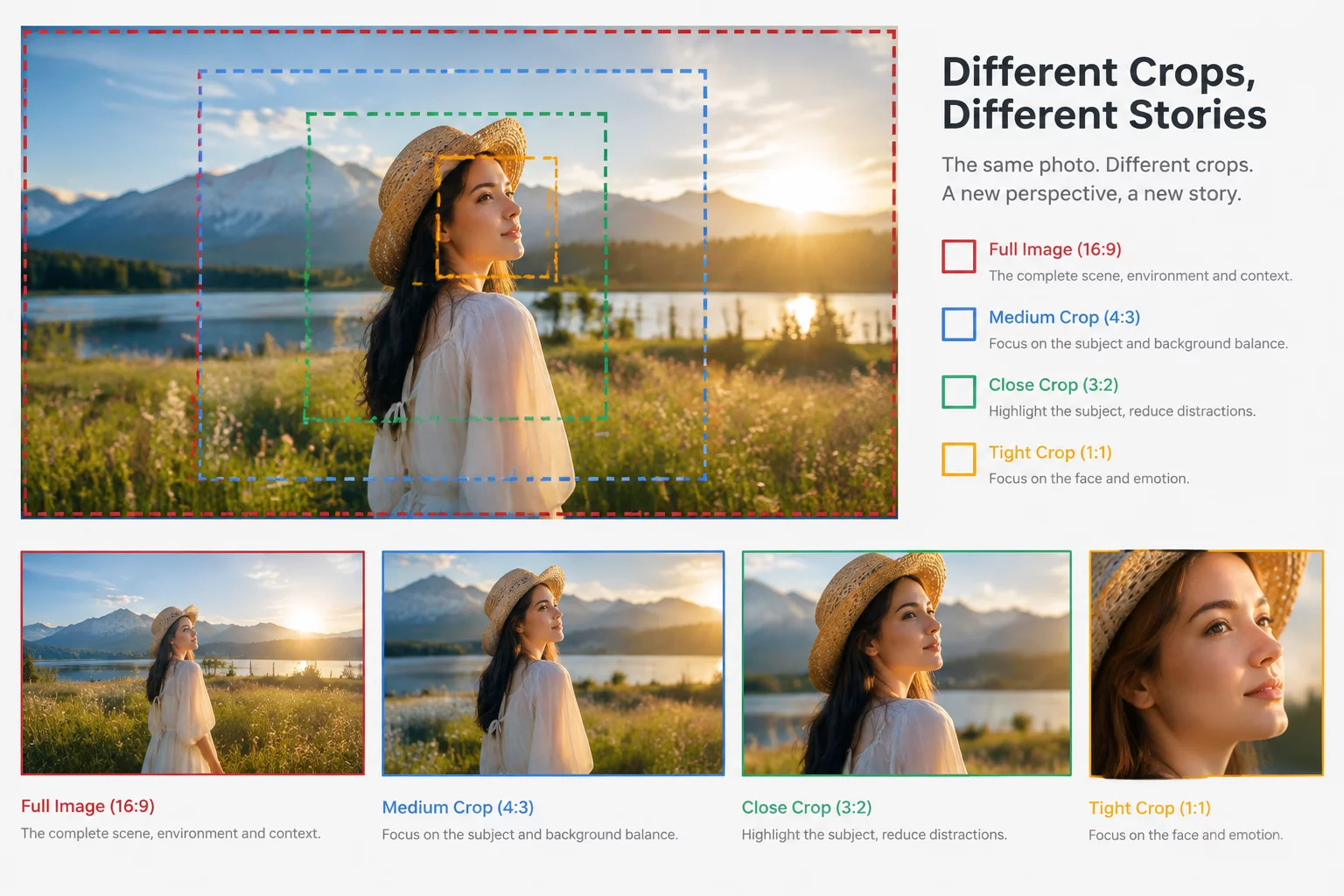
When an image gets cropped to fit a narrower or wider container, the narrative focus shifts dramatically.
Every photograph contains primary subjects, secondary context, and spatial breathing room that collectively establish mood and meaning. Cutting away environmental details alters the relationship between the subject and their surrounding space. An expansive scene showing calm isolation can quickly turn into an intense confrontation once tight borders enclose the central figure.
Designers frequently treat cropping as a mechanical exercise in filling pixels. In practice, eliminating background cues removes storytelling anchors, which forces viewers to reassign emotional weight to whatever elements remain within the active viewport.
Four Critical Ways Cropping Alters Narrative Focus
Adjusting bounding boxes produces immediate consequences across viewer comprehension and visual tone:
- Removal of Environmental Context: Stripping away background elements erases location clues, temporal indicators, and atmosphere.
- Unintended Proximity and Urgency: Tight facial crops artificially heighten tension where subtle neutrality was originally intended.
- Displacement of Focal Weight: Off-center subjects pushed against the edge create unintended visual tension and disbalance.
- Severed Interaction Lines: Cropping out secondary elements or gaze directions breaks the implied dialogue within the frame.
Maintaining visual integrity requires evaluating what story remains after the perimeter is trimmed, rather than assuming the original idea automatically survives.
Technical Adaptation Standards for Multi-Ratio Layouts
| Safe Focal Margin | Maintain minimum 15% safe padding around key visual subjects |
|---|---|
| Aspect Ratio Shift (16:9 to 1:1) | Re-center subject and extend background textures manually |
| Vertical Shift (1:1 to 9:16) | Stack secondary typography above or below the primary focal node |
| Context Retention Minimum | Preserve at least 30% background space to retain environmental cues |
Automated center crops frequently sever vital narrative cues. Applying intentional repositioning and canvas extension guarantees that the intended editorial nuance remains intact across digital and print touchpoints.
Production Framing Review & Consultation
Need an Expert Format Adaptation Review?
Submit your source visual assets to analyze framing shifts, typography hierarchy, and multi-channel consistency.
Book an Adaptation Review Session
Fill out your project parameters below to review framing preservation strategies with our design workshop team.
Related Guides & Format Studies